Cybersecurity Services
On-Site Help for Scam Recovery, Compromised Passwords, Suspicious Activity, Malware, Remote Access Tools & Account Security
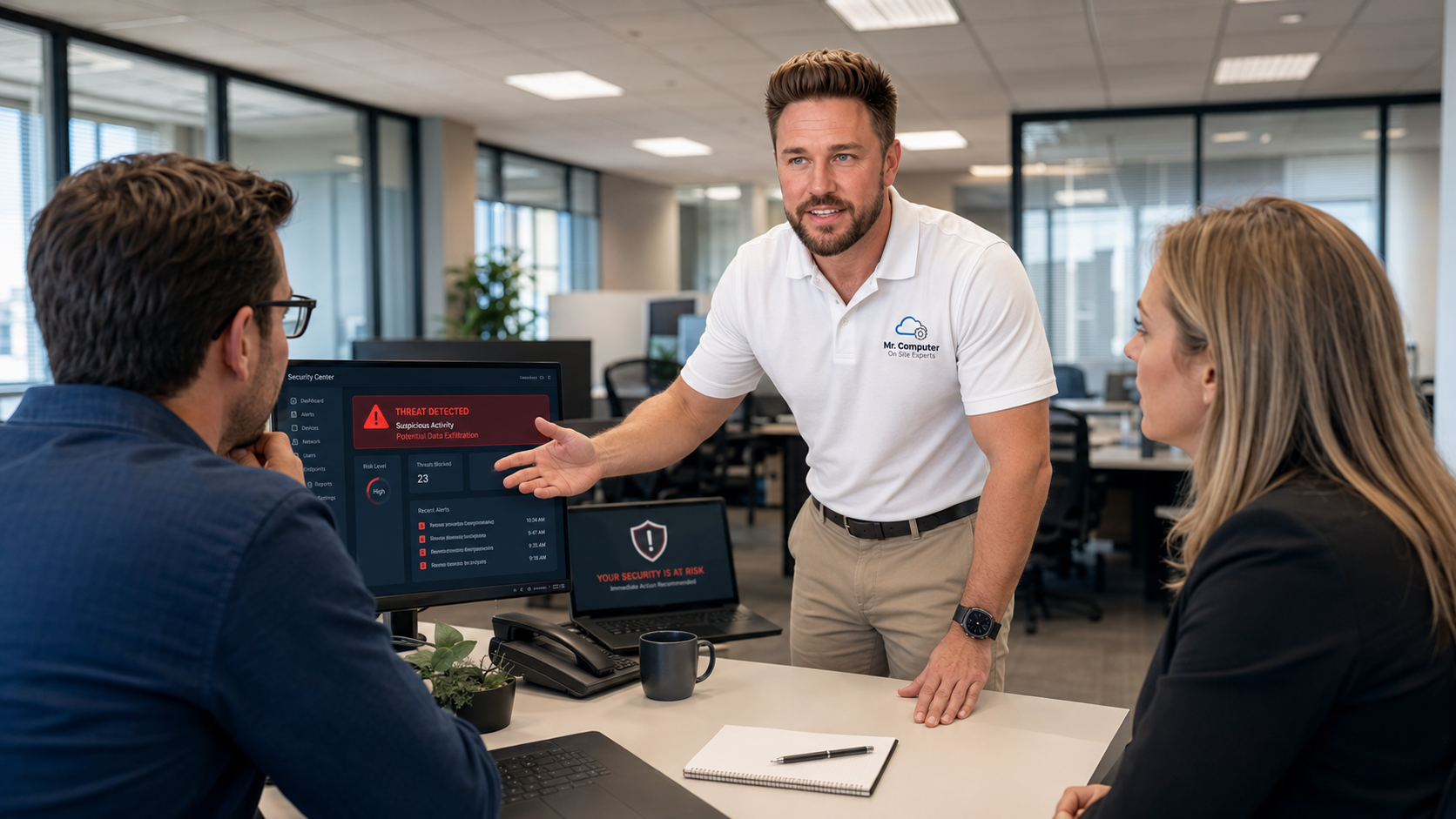
If you clicked a scam link, shared passwords, allowed a stranger to remote into your computer, received fake Microsoft warnings, or believe your accounts may be compromised, Mr. Computer can help reduce risk and secure your technology moving forward.
Cybersecurity Services We Provide
Our cybersecurity help is practical, on-site and focused on reducing risk for homes, home offices and small businesses.
Security Audit After a Scam
If a scammer remoted in or you believe passwords were exposed, we inspect the computer, review likely risks, check remote tools and help secure important accounts.
Password Security
Help updating weak or compromised passwords and reducing the risk caused by reused passwords.
Two-Step Verification
Set up two-factor authentication where appropriate to make important accounts harder to compromise.
Email Security
Review email settings, suspicious access, account recovery options and signs of account compromise.
Malware and Spyware Checks
Check for malware, spyware, suspicious browser changes, unwanted extensions and risky startup items.
Remote Access Tool Review
Identify unknown remote-access tools and remove or secure them when appropriate.
Router and WiFi Security
Review WiFi passwords, router settings, guest network options and practical home or office network security.
Backup Protection
Help set up backups so important files are better protected from loss, mistakes, malware or computer failure.
Allowed a Scammer to Remote Into Your Computer?
This is one of the most urgent cybersecurity situations we handle. If a scammer remoted into your computer, they may have had access to saved passwords, email, banking websites, documents, browser history, password managers, remote-access tools and personal information.
The safest first step is to shut the computer down or disconnect it from the internet. After that, we need to inspect the computer, look for remote-access tools, check for malware or spyware, and help you update passwords — especially accounts with financial implications.
Turn It Off
If the scammer is connected, turn off the computer or disconnect internet access immediately.
Do Not Keep Typing Passwords
Do not continue logging into banking, email or important accounts on a potentially compromised computer.
Schedule Quickly
These calls should be handled quickly because compromised passwords can affect multiple accounts.
Expect a Security Audit
We review the computer, accounts, passwords, remote tools, browser settings and likely exposure points.
Common Cybersecurity Problems We Help With
Most customers call after something suspicious has already happened. We help identify what may have been exposed and take practical steps to reduce further damage.
Remote Access Scams
Someone convinced you to install remote-access software or allowed them to control the computer.
Compromised Passwords
Multiple accounts may be at risk after passwords were shared, saved or exposed.
Fake Security Warnings
Pop-ups claim your computer is infected and tell you to call Microsoft, Apple or another support number.
Email Account Problems
Suspicious login alerts, password prompts, missing messages or signs someone accessed your email.
Unknown Programs
Remote tools, browser extensions, unwanted programs or suspicious apps installed on the computer.
Malware and Spyware Concerns
We check for malware, spyware, suspicious startup items and browser hijacking.
Password Chaos
Weak, reused or forgotten passwords can create security problems across many accounts.
Router and WiFi Security
We review WiFi passwords, guest networks, router settings and basic network security.
When One Password Is Exposed, Several Accounts May Be at Risk
Many customers call after a scammer gained access to the computer and then several accounts started having problems. If passwords were saved in the browser, reused across multiple websites, typed while the scammer was connected, or stored in documents, the risk can spread quickly.
We help customers prioritize the most important accounts first, especially accounts tied to email, banking, shopping, cloud storage, business tools or identity verification.
Email First
Email accounts often control password resets for many other accounts.
Financial Accounts
Banking, credit cards, payment apps and shopping accounts need urgent attention.
Saved Passwords
Saved browser passwords may need to be reviewed and updated after remote access scams.
Recovery Options
Recovery email, phone numbers and two-step verification settings should be checked.
Want to Be More Secure Moving Forward?
If you want to be well-informed about the best security tools and practices for your situation, schedule a paid cybersecurity consultation. We can review your computer, accounts, passwords, browser settings, antivirus options, WiFi security, backups and day-to-day habits.
We do not believe every customer needs the same setup. The right security approach depends on your devices, accounts, comfort level, business needs, passwords, email provider, backup needs and risk level.
Honest Expectations About Cybersecurity
Cybersecurity is about reducing risk, not making impossible promises. We focus on practical steps that help secure your computer, accounts and network moving forward.
We Help Mitigate Risk
No one can guarantee that future scams, hacks or account problems will never happen.
Fast Action Matters
The sooner passwords and accounts are secured, the better your chances of limiting damage.
Some Accounts Are Hard to Recover
Social media accounts can be difficult to restore if the platform locks the account or recovery options were changed.
Stolen Money Is a Financial Matter
If money was stolen, your bank, credit card company or financial institution should be contacted immediately.
How a Cybersecurity Service Call Works
We take a practical, step-by-step approach to help identify risk, clean up the computer and strengthen account security.
Inspect
We inspect the computer, browsers, installed programs, remote tools and obvious security risks.
Prioritize
We identify which accounts should be secured first, especially email and financial accounts.
Secure
We help update passwords, remove suspicious tools, improve settings and enable stronger protections.
Educate
We explain what likely happened and how to better recognize risky situations in the future.
Security Problem Happening Right Now?
Call us right away. If no regular appointments are available quickly enough, you may want to consider emergency service for urgent scam or account compromise situations.
Cybersecurity Help for Homes and Businesses
We help residential customers, home offices and small businesses improve practical security and respond to suspicious activity.
Home Users
Scam pop-ups, suspicious calls, compromised passwords, email security, antivirus setup, backups and safer browsing habits.
Home Offices
Secure work computers, WiFi, email, cloud accounts, passwords, backups and devices used for remote work.
Small Businesses
Practical cybersecurity help for computers, email, passwords, WiFi security, backups and employee scam awareness.
Worried About a Scam, Virus or Compromised Account?
Call Mr. Computer now. Tell us what happened, whether anyone remoted into the computer, and which accounts may be affected. We will help you decide the next safest step.